Hihi! :3 This is my book reviews page. Reviews are typically short & opinionated, but come with recommendations for similar books. If ye seek more of what you like, CTRL+F the title OR request it via a comment on my profile.
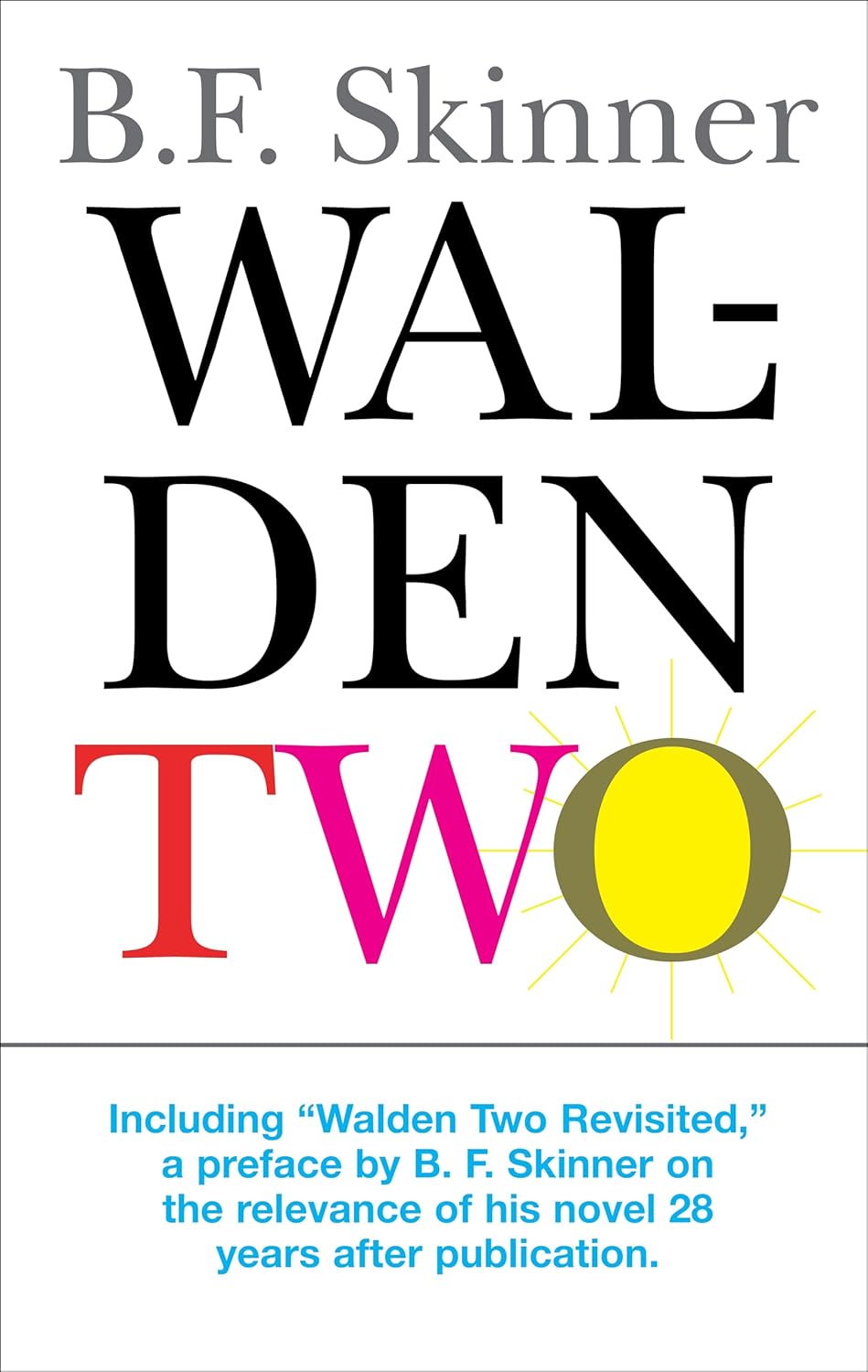
WALDEN TWO B. F. Skinner
Less a traditional "book" than a vintage strawman argument LMAO. My edgy commie ass self agrees with the overall message, but GOD was it boring to read. Beyond style, it's hard to pinpoint quite what made it boring, but...
Castle strawmanning as every type of counterargument to the Walden Two doctrine was a particularly annoying aspect. It would've been easy to have someone else express occassional doubts; we had those characters, yet they remained really politely inquisitive in a way that made Castle, being one guy, just seem deranged.
AKA: it's propaganda, bro. Good idea, annoying execution.
Similar recs:
Satin Island - Tom McCarthy

THE ART OF STARVING Sam J. Miller
A solid work that displays eating disorders accurately yet dramatically.
BIGGEST nitpicky gripe: There's a Syrian Arab character (Tariq) whose last name is Murat. UM. central-Asian expertise moment - Murat is nottttt a Syrian name, let alone a surname. It's not impossible for a Syrian to carry it, but it's almost exclusively claimed by Turkish, central Asian, and eastern European folk... ugh. Americans, amirite.
Moving on. The powers thing felt excessive, especially given that we're lead to believe Matt actually did all that shit, LOL. I thought he was just hallucinating himself in situations he'd read about on the news, but sometimes I questioned it... which is, of course, the point, but corny IMO. Starvation doesn't tend to do that to people. If we're going for raw, real depictions, this one is a bit too supernatural and a bit too self-aware. Admittedly, I'm biased about ED narratives in general. I don't like when the MC tangents about being "in control." That is the birthplace of most EDs, but rarely is it conscious. Usually starts out as normal weight loss or hope for someone to notice your pain and help you, ykwim?
Over all a pretty good work on its own, though. The story is engaging, with a mystery element that takes a backseat not in a "forgot about this" way, but in a perfectly realistic manner considering the MC's life and circumstances. It's gross the way teenagers are. It's fucking creepy, and it made me feel like I was part of something. Does that make sense? The "MC directly addressing the reader" choice is not often one that works well in YA fiction, but here it was so intimate as to feel like a friendship. This was the kind of friend I needed in school.
Similar recs:
A Trick of the Light - Lois Metzger
My Lesbian Experience with Loneliness - Nagata Kabi
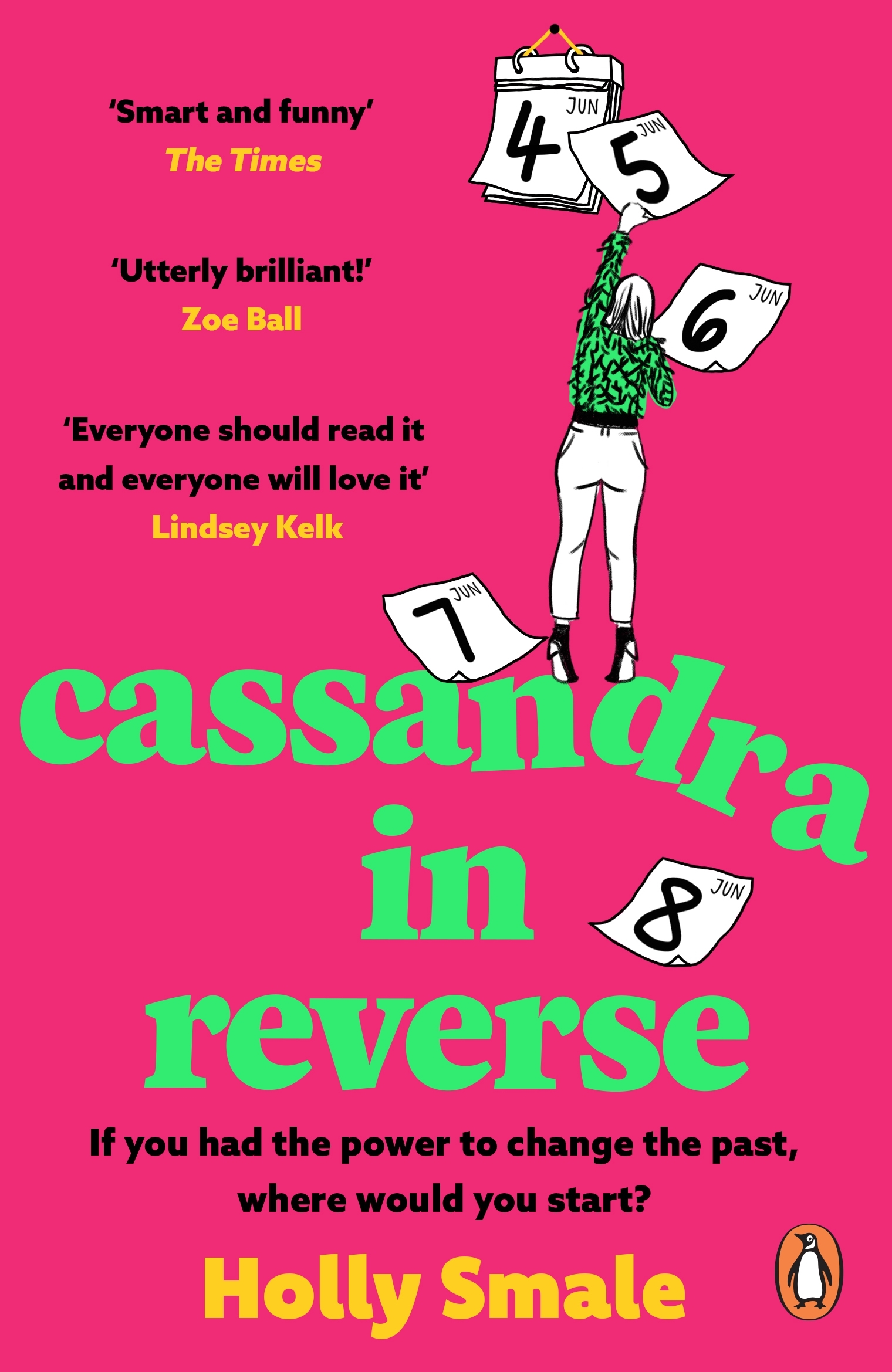
CASSANDRA IN REVERSE Holly Smale
40% of my reading experience was that "OMG you people can't do anything" tweet. Main character Cassandra is functional, technically, with a full-time job where she's trusted and assumed to be competent. She has a boyfriend and lives independently. She knows she's the weird one. I wholeheartedly understand the experience, but it doesn't make for an absorbing read.
If the book was, say, shorter, it'd be better. The complaining could be consolidated nicely. I also especially didn't like that the family reconciliation occurred so far in. Also, dumb ending, TBH :/ Look, man, it's entirely not worth travelling THAT far back. This feels much more like a "explain yourself and feel shitty for a week" thing.

SARONG PARTY GIRLS Cheryl Lu-Lien Tan
Good G-d, what a disappointment... I was expecting something up the alley of Crazy Rich Asians and I got... some whiny female stereotype with a bad lesson tacked on at the end? "Not being a gold digger because all rich men are assholes" is such a take when we know men without much also exploit and abuse women. I thought Jazzy's moment with that gay guy was cute and all, but seems like Tan forgot he's still an active enabler and bystander to the straight men who suck so much. Also, it was weird as all hell that Jazeline was that ditzy. Unless they're truly brainwashed and/or 10 years old, average women do not think being pressured into sex with their friend's cheating semi-BF is somehow normal or that they're overreacting.
Jazzy does have a few moments where she's self-aware and intelligent to the state of womanhood in this world (that weird-ass "what's it like to be a modern Singaporean woman" scene was the big one, even though who TF asks that, let alone to a person they just met?), but it all gets erased by a new dumbness in the next scene. Her characterisation is too inconsistent to tell if she's actually that dumb or just lying to herself. I did love that Jazzy was an unreliable narrator that readers could easily see past. On purpose. Tan was a talent at depicting patriarchal brainwashing in real time solely for that aspect.

THE SARAH BOOK Scott McClanahan
Everything about this book made me say "wait, what...?" It's a weird, experimental fiction thing that tricks you into thinking it's autobiographical for a while because the author named the narrator after himself (I'm still convinced it's real and he wants us to think he's being El Quirky). Kind of unenjoyable when you're a maniacal feminist... MC is a whacko, rude, asshole alcoholic who treats his wife terribly & embarrasses her until she divorces him. It's his POV so you experience his line of thinking, but, pleasantly, the author doesn't get scrote-y about it. You're supposed to see MC Scott as a massive dick through & through.
Style-wise, this book was pretty dull except for a few lines hidden deep in the core that hit really hard & really weird. That "our gender was pain" line? Iconic.

THE CATCHER IN THE RYE JD Salinger
A classic I never read in school! This book is known for being very complain-y, but I found it more hypercritical. Holden is a complainer, but it's because he's gained the awareness that modern life is kind of hell. When you're Big Brain like that, you do become a real hater.
I especially found the scene where he wakes up to his ex-teacher almost-maybe-molesting him (reminds me of a guy I know named Jeffrey :/...) SO SYMBOLIC AND RESONANT. When the one force that spurs you to do good, to make something of yourself, that believes in all your potential, is the very force that seeks to abuse you, how are you supposed to see the good in applying yourself? Ho-nest-ly. And when Holden complained about it like "this has happened about 20 times since I was a kid"??? Dude. WTF.
It's important to note that Holden isn't even some sad poor kid with nothing going for him. He's nowhere near having seen the worst of humanity. His narration implies that he's in a well-to-do family, with vacationing and multiple prep schools to switch between and a dad with a good job, and still he doesn't view the world as a haven. People are assholes and rich ones doubly so.
He's a dick of a character, but a relatable one. I'd actually say I found this book really modern. It holds up today in nearly every way except inflation (people in this book act like US$15 is a lot LOL) and Salinger just doesn't hold back on shit that most would be afraid to say.
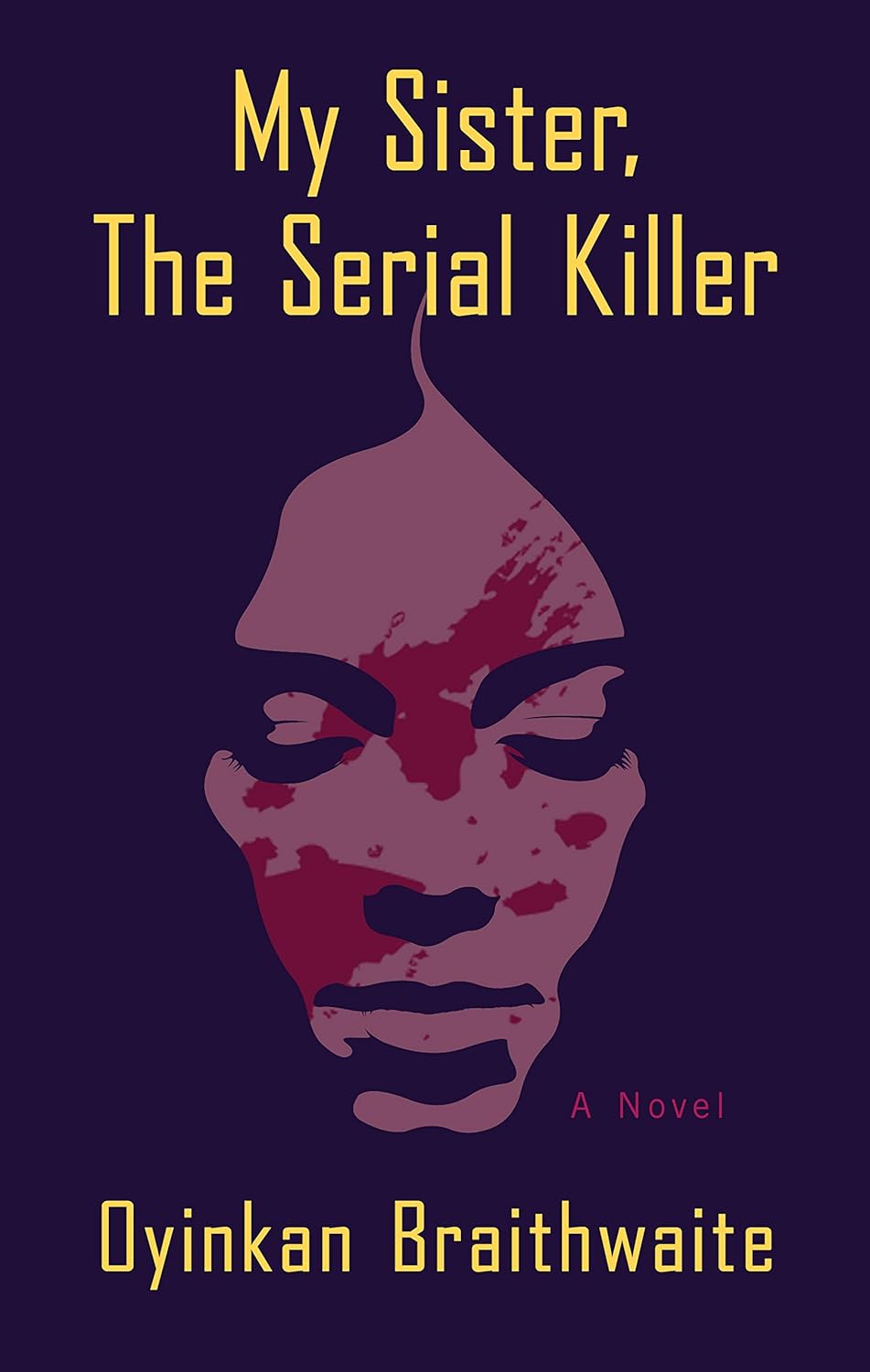
MY SISTER THE SERIAL KILLER Oyinkan Braithwaite
Interestingly, I didn't get the sense that Korede even liked her sister.
In My Sister the Serial Killer, narrator and protagonist Korede finds herself entangled in the aftermath of her sister's latest killing, triggering the painful backstory of her life and relationship with her family. Sister Ayoola is a real maniac, it turns out, who's killed more than her fair share of boyfriends. She's also prettier, cooler, and more successful than Korede, with a manipulative streak that makes people bow at her feet.
Ehhhh. The "implied rivalry" between Korede and Ayoola is juvenile and disrespectfully stereotypical. Of course two girls are fighting over a boy... of course girl A is jealous of how hot and popular girl B is with the boys... SMH. Korede might love her sister through it all, but the narrative is driven by such silly ideas of female social dynamics that it feels like disrespect. I do, however, love, love, love normal-looking characters who are twisted little freaks on the inside. A beautiful-woman psychopath is nothing new, but one who's also a messy (Ayoola never cleans her damn room) loser (unemployed, runs a small business funded by a rich guy she's fucking) who can't do shit for herself (barely knows how to cook, goes on her phone when people try to teach her) and relies on her mom for everything... okayyyyyyy, queen! That's what real mental illness looks like, even the Twisted Psychopath kind. That's my Ayoola!
While the ending matched the story's twisted-ness, it was anticlimactic and cheesy. Okay, Korede sticks with her sister because they've suffered so much as a family. Okay, she defends her loved ones through thick and thin. Okay, women gotta stick together in the face of cruel, cruel men. Except that the idea of sticking with her clearly makes Korede miserable. Why not just sit this one out, man? She doesn't have to send Ayoola to jail, but she also doesn't have to assist her in these behaviours.

PATRON SAINTS OF NOTHING Randy Ribay
Post-COVID perfection! Which is interesting because it was published in 2019. I assume the author was working on it before COVID was even a glint on the horizon... sigh
Yeah, this is the quintessential, hyper-accurate, truth-incarnate depiction of Gen Z and Gen Alpha. A tech-savvy lead who finds as many answers in the digital realm as the real one, who acts vague and ironic and avoidant because Real Shit is too vulnerable/cringe, a weird wealth of knowledge about overly specific shit owed to the internet, aaaand very real, very normal teenager behaviours that are difficult to explain, easy to justify in the moment. Even though he's the narrator, I so appreciated that Jay is not depicted as an asshole or made to regret every little "bad" thing he does. You see that type of moralising in a lot of books, & it's quite silly considering we all tell white lies & get defensive & act entitled, especially as teens. Topped off with an excellent ending.
It's shocking how in-touch it was, too. The references will become dated with time, but "they met through a forum for an anime about gay figure skaters" = excellent Yuri on Ice reference, especially from someone who's not in the know, and very relevant to the "type of person" that character is. LOL.
Certain scenes will trick you into thinking this is an "identity politics" sort of story, but in fact Ribay's messaging veers closer towards a harsh critique of identity politics. Jay talks so much about it, about how seeing all the poverty & corruption in the Phillipines makes him feel dumb when his biggest worry is university applications. Returning to the U.S. does remind him that he's a minority, but what Ribay ultimately urges readers to consider is whether all that social-media-induced self-centred matters half as much as, say, doing good in the world. What good is your Filipino identity if you know nothing of the great, big, vibrant Filipino world? If you don't want to help your own through their pain?
DIGRUNTLED Asali Solomon
While it diverged a bit from its focus, Disgruntled is, at its core, a worryingly evocative tale. It's a masterpiece of a telling, unafraid of depicting heartbreak and hustle and assholery in their full, full truth.
I really liked protagonist Kenya, and I was fascinated by the weird self-awareness-slash-discomfort-slash-acceptance that her understanding of racial dynamics brought. To think she'd never have understood it quite that way if her parents weren't black nationalists... the author has said that it's based on her own childhood, and I'm glad there's someone who captured the experience of being an outcast even when you're born and raised in the same place as all your peers. When Solomon described Kenya's experience, these whacky holidays no one else knew about, these everyday things she was forbidden to engage in that denied her entry to the worlds of kids her age... gotdamnnnnnn. It might have given her a more critical, more intelligent worldview, but it fucked with her head. LOL. Relatable!
There was one friend, Zainab, who I would have liked to hear more about - it seems as if Kenya was one of very few black girls at her new school, but that there were a few other POC scattered about who still bore privilege the black students didn't. What was up with that? Was Zainab treated any different, or was she also white and I missed something?
Really, a good story. It's one of those things I wish I'd read as a kid. I'm glad Asali Solomon put this out into the world - kids like this still exist, and they still feel like freaks, and they won't always know without being told whether to reject society for rejecting them or if they should abandon the world they were raised in, and it's healthy and necessary for stories like this to show both sides of the coin. It helps that the writing is good. You feel so depely for Kenya that saying goodbye is pure heartbreak.

SO THIRSTY Rachel Harrison
WARNING: Extremely Wattpad writing style! With all the expected bells and whistles - overdescribing every scene, interjecting stream-of-consciousness introspection, mysterious flirty dialogue that doesn't really mean anything... So Thirsty is described as a "feminist horror novel," but how feminist is it when the main character just finds another man to replace the one she left behind? When she still applies makeup in the morning after deciding to abandon all the beauty standards she used to obsess over?
Regardless of what I think about the writing, I actually just didn't like this one much. The "female oppression" aspect makes some sense - I can see why a suburban, upper-middle-class woman wouldn't want to give up on the life she's built even after repeat cheating - but also reeks of privilege such that it invalidates everything. Someone with a well-paying job who just doesn't want to start over pales in comparison to real oppression, YKWIM? Even the messaging we're meant to extract from her newfound vampire life/friend group are silly. Sloane runs away with her best friend and a gaggle of vampires she just met, sure, but no one involved seems like a particularly good friend. I liked Naomi. I appreciated her pushing Sloane out of her shell and calling out idiocy when she saw it. But it would've been nice if Sloane gained something from these other vampires besides a new boyfriend. Their dynamics are hardly explored; everyone's kind of annoying and seems focused on fucking each other a lot, but what happens when an argument breaks out? When they disagree? When there's a breakup or they don't have enough blood to go around?
Much as I agreed that Sloane was a tightass who needed to loosen up some, she also thought about things practically at times and was treated as irrational.
But, yeah, I didn't like the writing, either. It doesn't seem like a novel that's capable of exploring deep themes well, even though it tried. Harrison is a supernatural-horror author, but So Thirsty isn't scary at all.

MARTYR! Kaveh Akbar
Martyr! is a good story when you treat it as an epic of the main character's imagination - that he's detached from reality becomes evident just at the end. I wouldn't say I care for the whole of the book itself, though, nor its main conflict. Cyrus' addictions come from a place of real pain, yet the author chose to play them up mostly as whiny identity stuff. Dude... almost a quarter of the U.S. population has immigrant parents. He's tramatised by loss and loneliness and alcoholism, not by a racism the book itself says he hasn't faced the brunt of. Cooing over ugly babies isn't some awful labour. That's really where this book falls short - it's like Akbar can't explore Real Deep Shit unless it's through poetry.
Being real, the 'he made it all up' headcanon is precisely the only way I can accept the Big Twist. Otherwise, this circling-back-around nonesense is. Estupido. It was very predicatable, but I told myself again & again that it must have been something else. Some other family member. & when my prediction came true I was deeply disappointed. Really, man? Really?
Well but the writing was acceptable. I liked the interspersals and weird dreams more than I liked the actual story LOL. I could read those allllll damn day.

PONTI Sharlene Teo
This one was... aight. It had an immature first-time-writer quality I didn't care for and lacked direction. I loved its down-to-earthness & the strange tinge that kept things interesting. I like stories that aren't afraid to subvert the "requirements" of a book, but Ponti didn't exemplify what I like about them.
Teo's writing style is engaging but tries too hard to sound worldly and tormented. It gets strange at the end in a way that attempts to lure readers in, get them curious and afraid, but falls flat from sheer disinterest and comes off as something thought of merely at the last minute.
This book alternates between three characters' perspectives. While I normally don't mind this, it was a detriment to Ponti because it detracted from the story itself to overexplain largely unimportant elements of characters' lives. These storylines contextualised why the characters were the way they were, but they kept things from happening and made the book feel like an incohesive jumble of tragic people existing.
The MCs' friendship seemed like it would end all dark and twisted but, in what would not normally be a pleasant subversion, didn't. I love that Teo keeps it real - sometimes friendships do simply end because the parties are incompatible. It's an okay story and, for internationally minded people, gives you a glimpse of the Singapore that regular, non-wealthy non-metropolitan people occupy, but this ain't anything to write home about.